The uncommon birds of Schloss Rheydt
Usually on this blog, I discuss birdwatching around Edinburgh, but this time is a rare exception. Here we travel to West Germany, where I met Ilan and explored the beautiful Schloss Rheydt. With my visit to Germany came the perfect opportunity to discuss some birds that are prevalent overseas but uncommon or absent from the UK.
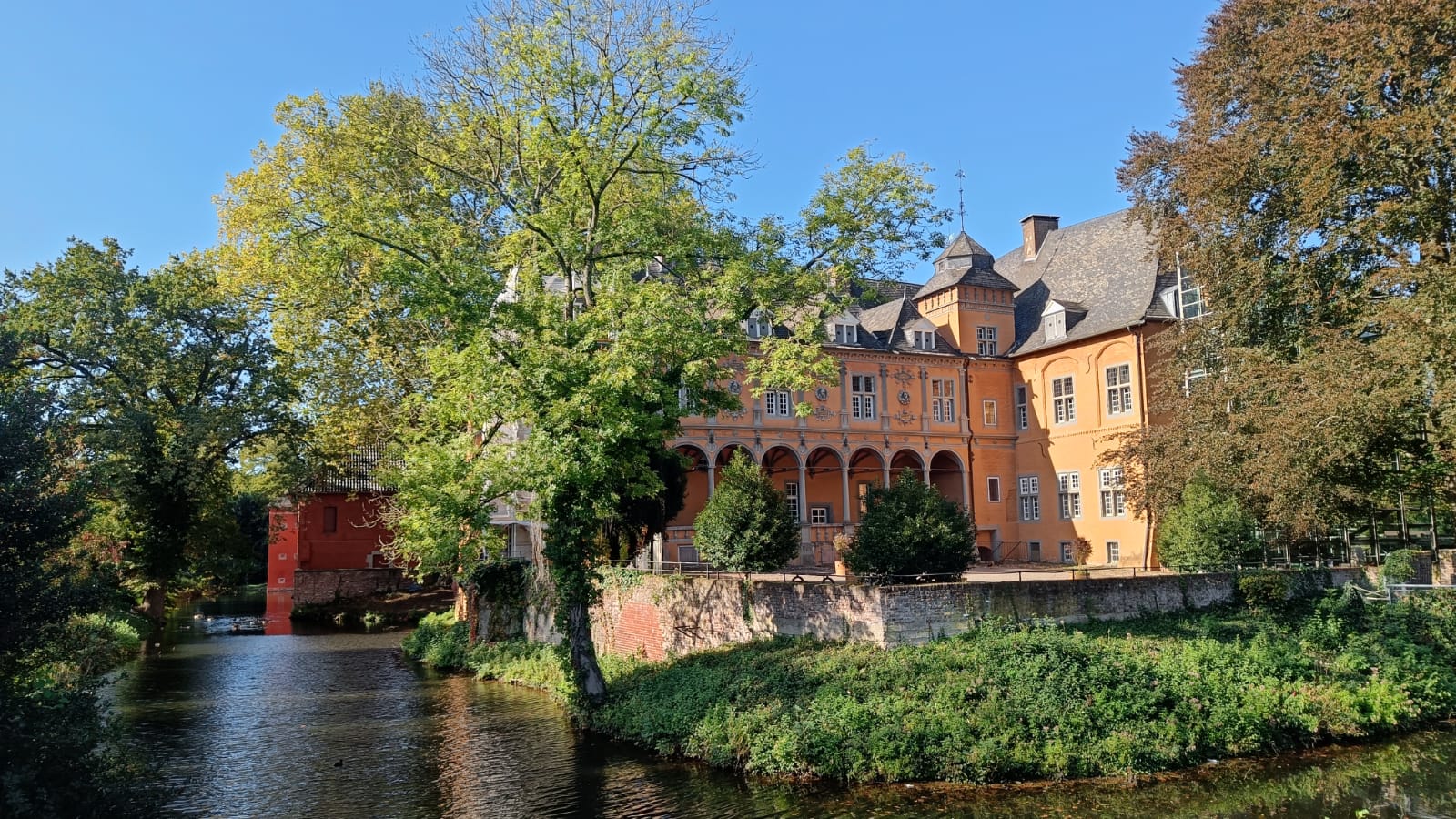
Schloss Rheydt is a Renaissance palace, surrounded by a moat and around 20 to 30 wild peacocks, which roam freely around the grounds. In the surrounding area is the castle park and woodland trails. The walk along the trails follows the river Niers, which feeds into the moat. All these environments provide habitat for a wild variety of birds and other wildlife, including much-loved red squirrels, badgers and even wildcats (which are slowly being reintroduced in Scotland!).
Our first uncommon bird is the short-toed treecreeper, which is a rare visitor to the British Isles. Treecreepers, as the name suggests, are often found creeping up tree trunks. Interestingly, they can only climb up, and not downwards, so if you see a tiny bird creeping up a tree, it could well be a treecreeper.
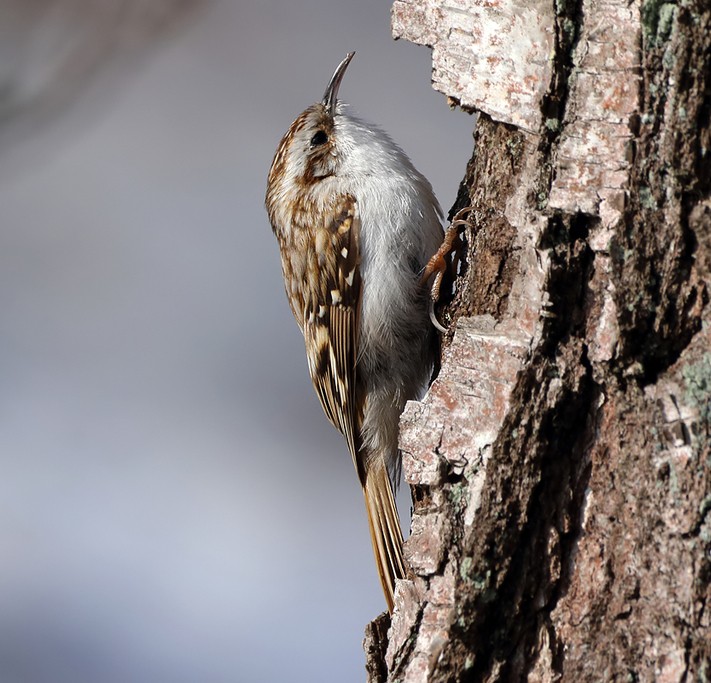
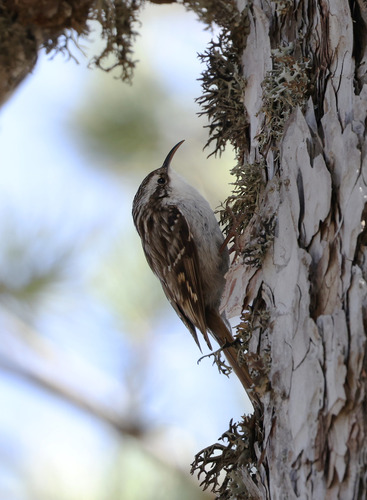
Britain’s only treecreeper is the Eurasian treecreeper, pictured left. I learned that a way to spot the difference between these identical-looking birds is down to the white bar across the wing, which is broken is the Eurasian version, and unbroken in the short-toed version! Apparently, the short-toed is largely a misnomer and they do not have shorter toes.
An easier way to tell these birds apart is by their call: the Eurasian higher-pitched and flowing, the short-toed slower and more regular. Thankfully, we had the Merlin ID app to verify it for us, and I was very pleased to see my first treecreeper!
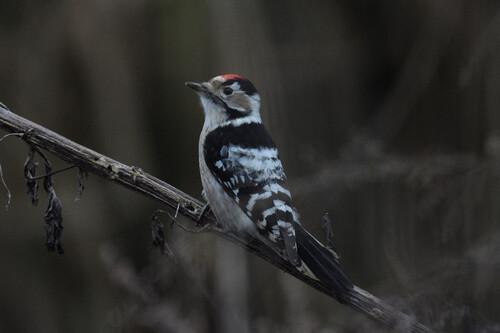
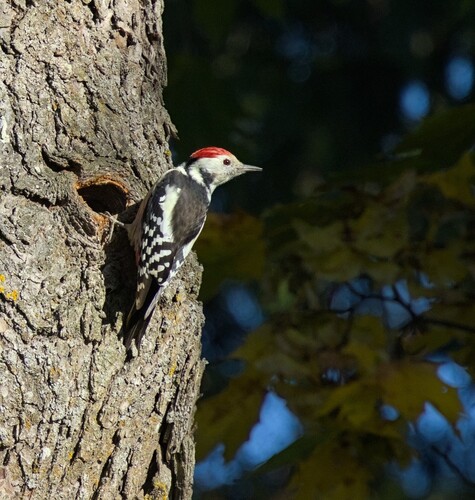
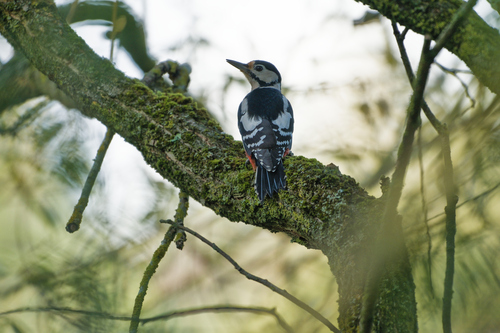
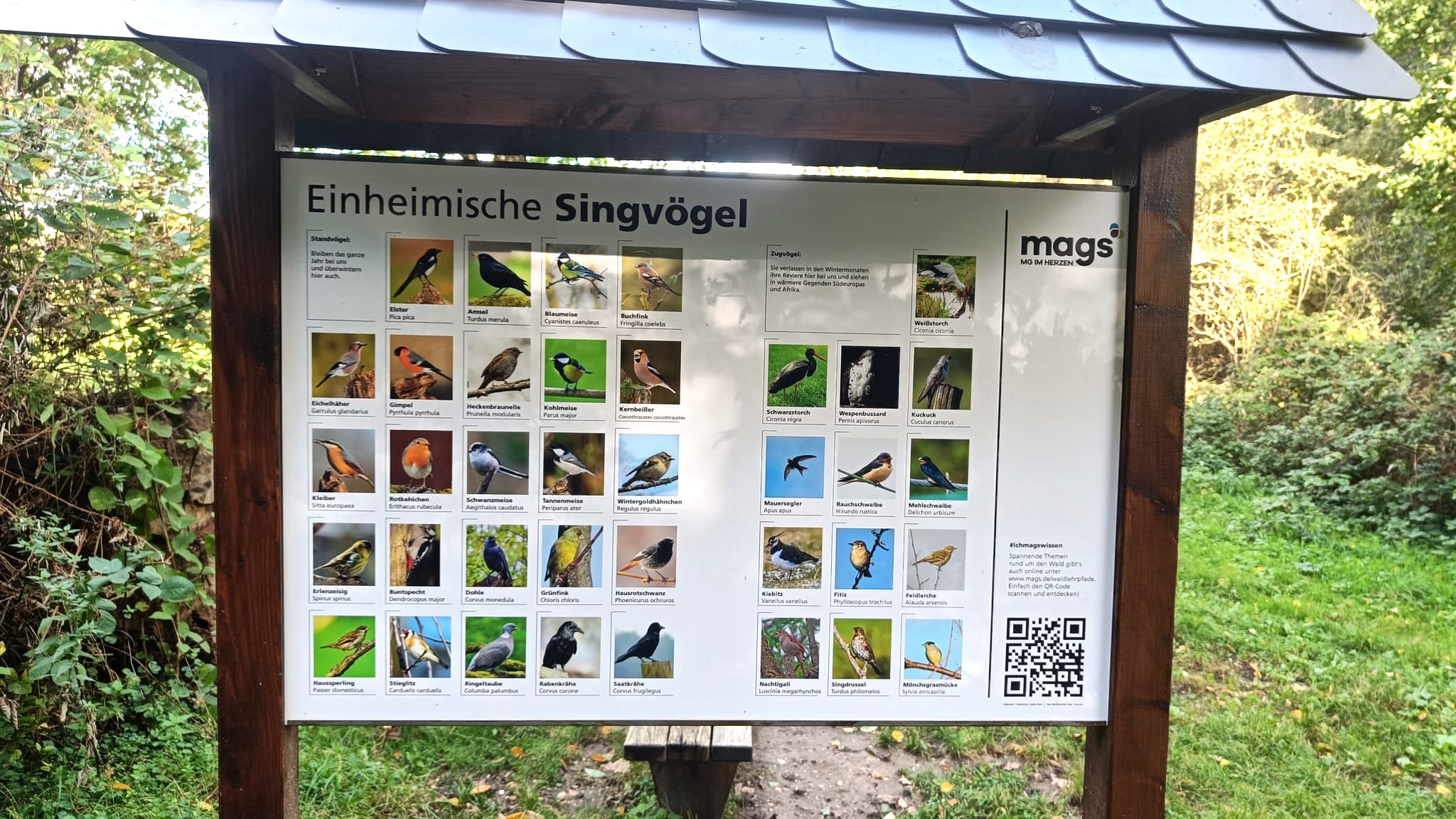
Another bird that we heard was the middle-spotted woodpecker. This woodpecker is absent from the UK entirely, where there are only three species: lesser-spotted, great-spotted and green woodpeckers. Thankfully, middle is not a misnomer, and refers to the size in between the lesser and greater species. Of course, we showcase all three woodpeckers above!
Merlin ID also detected several other British rarities, including a firecrest and a hawfinch, which are both impressive in very different ways. I never would have thought that one area could provide habitat for these two birds.
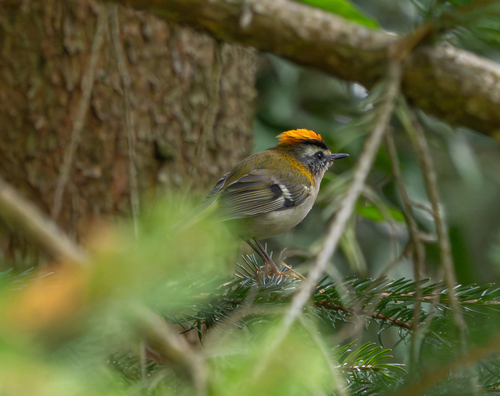
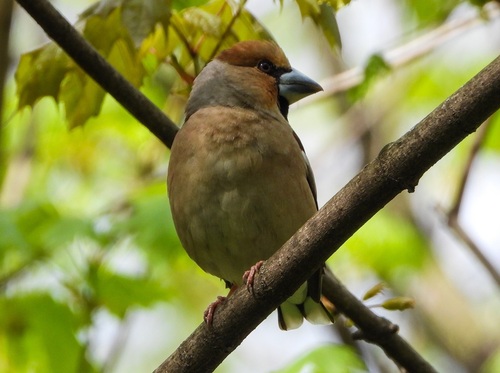
The firecrest has a flaming yellow crest, which is tied with its relative, the goldcrest, as the smallest British bird. On the other hand, the hawfinch is the largest UK finch. In a way, these birds are two extremes of UK birds, with the energetic goldcrest and its needle-like beak compared with the far weightier, bigger beaked hawfinch.
Altogether, we saw and heard 25 species of birds, listed below with ‘S’ for seen, and ‘H’ for ones that Merlin heard. Special thanks to Ilan for his patience and for a musician’s ears which helped to spot these birds!
| Species name | Seen (S) / Heard (H) |
|---|---|
| Blackbird | S |
| Blue tit | S |
| Canada goose | S |
| Carrion crow | S |
| Chaffinch | H |
| Coot | S |
| Cormorant | S |
| Eurasian nuthatch | H |
| Firecrest | H |
| Great tit | S |
| Greater-spotted woodpecker | H |
| Grey heron | S |
| Grey wagtail | H |
| Greylag goose | S |
| Hawfinch | H |
| Indian peacock | S |
| Jackdaw | S |
| Kingfisher | H |
| Magpie | S |
| Mallard | S |
| Moorhen | S |
| Robin | S |
| Ruddy shelduck | H |
| Short-toed treecreeper | S |
| Woodpigeon | S |